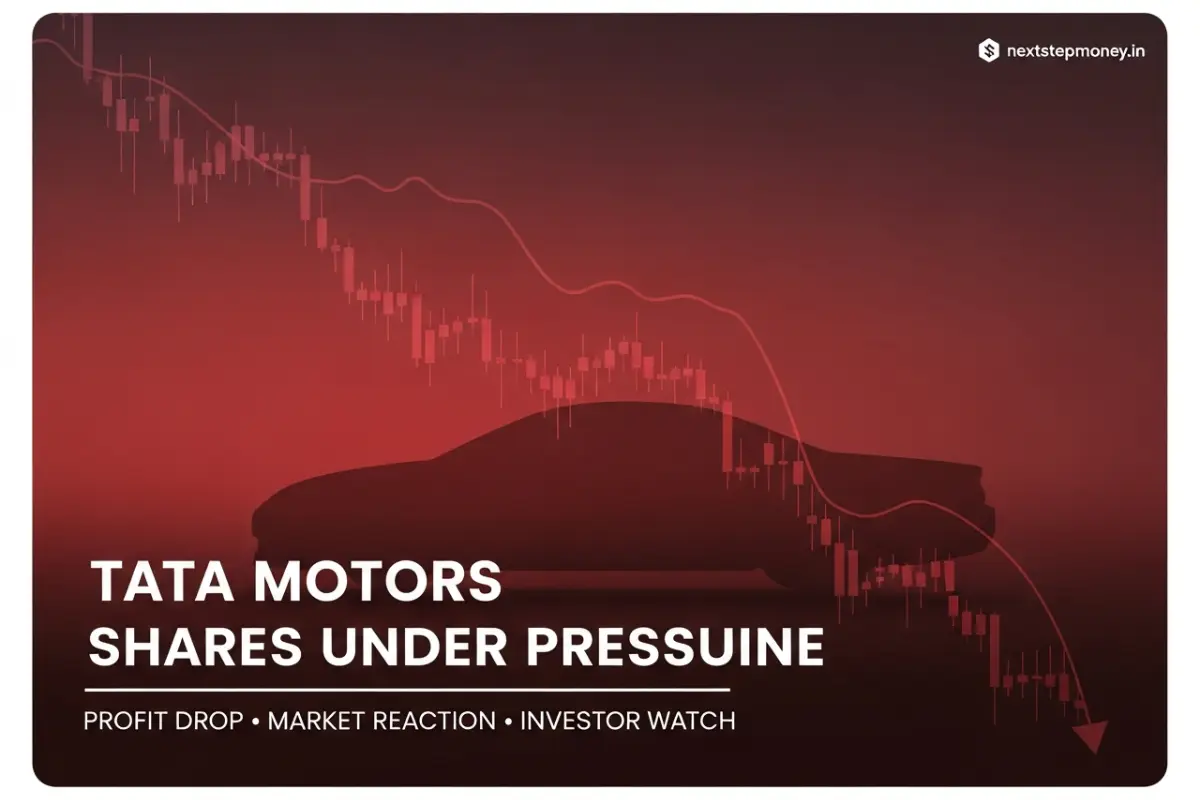
हम आज के शेयर बाजार सत्र में Tata Motors shares fall 4% की स्थिति और कंपनी के Q3 net profit 48% गिरकर ₹705 करोड़ पर आने के बाद बने market sentiment का विस्तृत विश्लेषण प्रस्तुत करते हैं। Auto sector के इस बड़े नाम में आई यह गिरावट short-term volatility के साथ-साथ investor decision-making के लिए महत्वपूर्ण संकेत दे रही है।
हम देखते हैं कि profit decline headline के बाद stock में immediate reaction देखने को मिला, जिससे trading volumes में तेजी आई और intraday pressure बना।
Table of Contents
Tata Motors Q3 Results: Financial Performance Snapshot
हम Q3 numbers पर नजर डालें तो profit में sharp contraction दिखाई देता है।
Key Financial Highlights:
- Net Profit: ₹705 करोड़ (YoY 48% गिरावट)
- Revenue Trend: Mixed performance
- Margin Pressure: Cost factors का प्रभाव
- Market Reaction: Share price में 4% correction
यह profit drop earnings sensitivity और cost structure dynamics की ओर संकेत देता है।
4% गिरावट: Market क्या Reflect कर रहा है
हम इस गिरावट को केवल headline reaction नहीं मानते। Large-cap auto stock में इस तरह का correction अक्सर earnings adjustment के साथ जुड़ा होता है।
हमारे आकलन में यह movement दर्शाता है:
- Earnings disappointment reaction
- Short-term profit booking
- Institutional portfolio reshuffle
- Auto sector sentiment impact
यह price action earnings-driven volatility को reflect करता है।
Trading Volume और Market Participation
हम देखते हैं कि गिरावट के दौरान trading activity तेज रही। High volume sell-off अक्सर strong reaction phase को दर्शाता है।
यह संकेत देता है:
- Active institutional trading
- Retail reaction buying & selling
- Derivative positioning adjustments
High participation environment price discovery process को तेज बनाता है।
Auto Sector Context: Broader Industry Scenario
हम broader auto sector को देखें तो:
- EV transition phase
- Demand normalization
- Input cost fluctuations
- Export market dynamics
ये factors sector volatility को प्रभावित करते हैं, जिसका असर Tata Motors जैसे major player पर भी पड़ता है।
Tata Motors Business Structure Overview
हम देखते हैं कि कंपनी multiple segments में मौजूद है:
- Passenger Vehicles
- Commercial Vehicles
- EV Segment
- Luxury Segment via JLR
Diversified presence risk balance देता है, लेकिन segment-specific performance short-term earnings impact कर सकता है।
Technical Signals क्या बता रहे हैं
हम technical structure पर नजर डालें तो:
- Price correction earnings trigger के बाद
- Momentum indicators में short-term weakness
- Support zones पर attention
यह pattern reaction-based decline को दर्शाता है।
Buy, Sell या Hold: Positioning View
हम इस situation को तीन angles से देखते हैं:
Short-Term Traders:
Volatility elevated है, quick reaction trades संभव हैं।
Medium-Term Investors:
Earnings clarity और sector trend monitoring महत्वपूर्ण।
Long-Term Holders:
Business diversification और auto sector transformation factors ध्यान में रखे जाते हैं।
Investor Psychology और Sentiment
हम देखते हैं कि sharp profit decline headlines sentiment pressure बनाती हैं। Large-cap stocks में reaction phases अक्सर exaggerated बताते हैं।
Market participants earnings shock absorb करते हुए नई equilibrium खोजते हैं।
आगे की संभावित दिशा
हम मानते हैं कि आगे stock movement निम्न पर निर्भर करेगा:
- Earnings follow-up signals
- Auto sector demand cues
- Institutional flow behavior
हमारा समग्र आकलन
हम इस पूरे घटनाक्रम को Earnings Reaction + Market Adjustment Phase के रूप में देखते हैं।
Tata Motors shares fall 4% after Q3 net profit drops 48%:
- Earnings sensitivity दर्शाता है
- High participation phase दिखाता है
- Market structure realignment को reflect करता है
यह movement auto sector dynamics और investor positioning activity को उजागर करता है।